Electronics 1981
Sony
Sony Tape. Full Color Sound.
FROM THE PRINTED PAGEOriginal ad copy
OCR transcription from the archived page. Scanning and reading-order errors may remain.
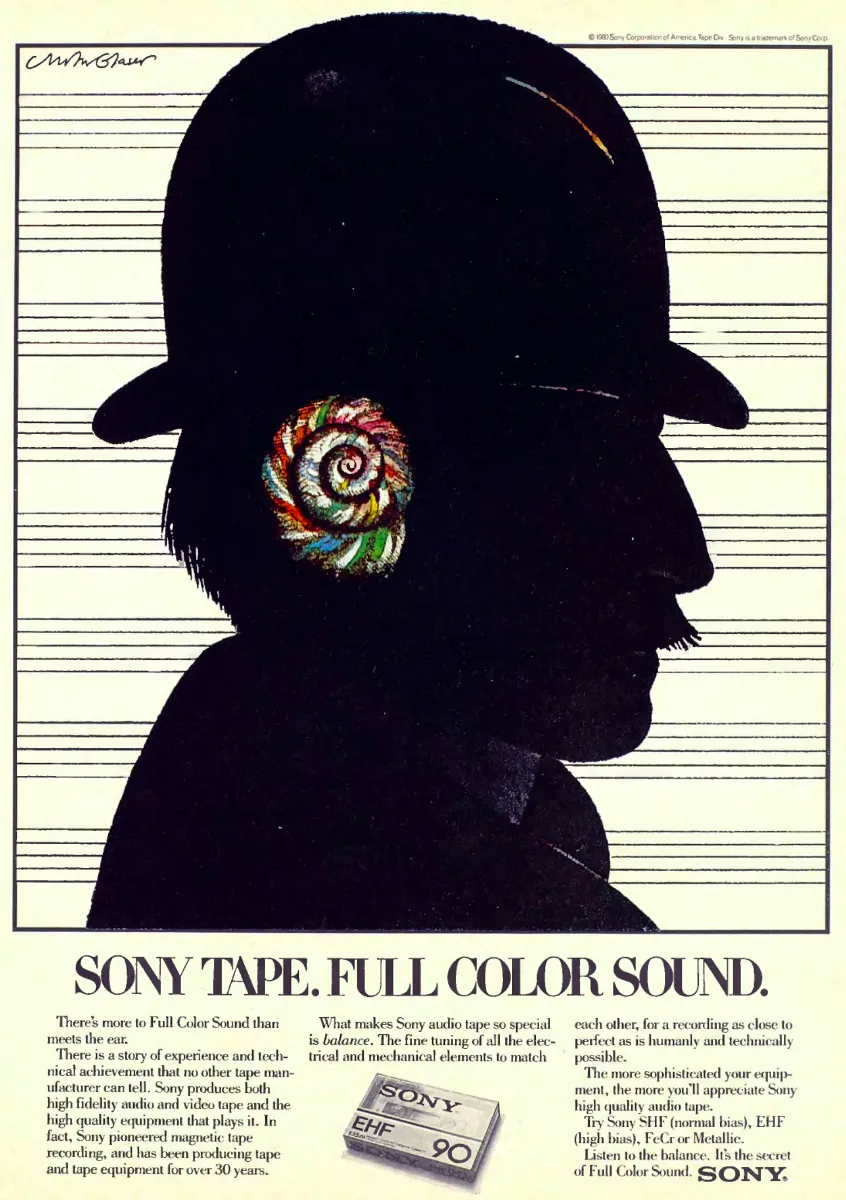
Milton Glaser © 1980 Sony Corporation of America, Tape Div. Sony is a trademark of Sony Corp. SONY TAPE. FULL COLOR SOUND. There's more to Full Color Sound than meets the ear. There is a story of experience and technical achievement that no other tape manufacturer can tell. Sony produces both high fidelity audio and video tape and the high quality equipment that plays it. In fact, Sony pioneered magnetic tape recording, and has been producing tape and tape equipment for over 30 years. What makes Sony audio tape so special is balance. The fine tuning of all the electrical and mechanical elements to match each other, for a recording as close to perfect as is humanly and technically possible. The more sophisticated your equipment, the more you'll appreciate Sony high quality audio tape. Try Sony SHF (normal bias), EHF (high bias), FeCr or Metallic. Listen to the balance. It's the secret of Full Color Sound. SONY. SONY EHF 90
Commentary
I found the product’s promise where the ear should be. A bright spiral interrupts an otherwise almost solid black profile, making the experience of sound visible through colour. The bowler hat and manuscript staves give the figure a formal, faintly old-fashioned setting; the little cassette package below is the comparatively prosaic thing this elaborate picture must sell.
The signature at the top reads Milton Glaser. A Sony poster offer in the January 1981 issue of Stereo Review identifies a Glaser design as “The Shell.” That makes the spiral more than a decorative burst: a shell’s folds can suggest an ear while its colours supply a vocabulary for richness that a photograph of magnetic tape could hardly provide. I read the quiet silhouette as a way of concentrating attention on one startling sensory substitution.
The copy changes registers underneath. “Balance” is defined as matching electrical and mechanical elements, while Sony’s manufacture of both tape and playback equipment becomes its claimed advantage. This is a system argument made on behalf of a small consumable. SHF, EHF, FeCr and Metallic then remind the buyer that appreciating the image still leads to a technical choice at the counter. The page offers no measurements with which to compare those formulations; its engineering assurance rests on the manufacturer’s account.
That list exposes a once-familiar part of listening: choosing a recording medium to suit equipment. A listener selecting a stream now encounters different technical questions, but usually no physical tape formulation. Here, high fidelity includes an additional object to buy, handle and match. The illustration lifts that practical shopping decision into an imagined experience before the small print brings it back to its machinery.
For young copywriters, “Full Color Sound” is useful because the image does the translation. “Meets the ear” borrows the structure of a familiar phrase about sight, joining the senses again. The closing invitation to “Listen to the balance” returns the poetic opening to the technical explanation. The lesson is to let a metaphor open the promise, then give it a product-specific meaning readers can follow.
Sony’s audio history records its Type G tape recorder in 1950. The company continues to make audio equipment, including professional headphones, although this cassette assortment is a historical offer.
The formulation names and tape-equipment matching belong to the medium shown. The enduring design problem is how to advertise an experience a printed page cannot reproduce. Sony’s answer is to make sound look abundant, then use its engineering reputation to explain why the colour should be believed.