Automotive 1972
Saab
There are two cars built in Sweden. This is the one with front wheel drive for a firmer grip on snow and ice.
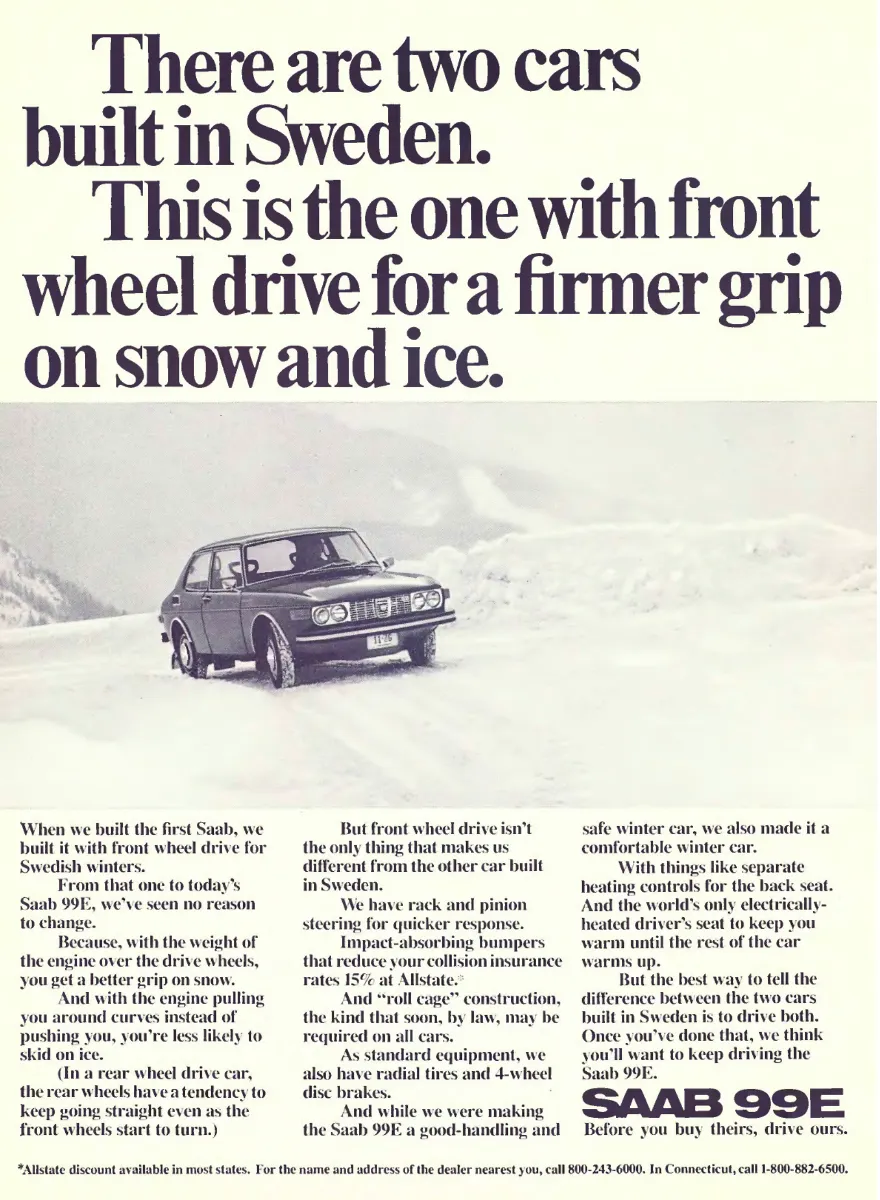
FROM THE PRINTED PAGEOriginal ad copy
OCR transcription from the archived page. Scanning and reading-order errors may remain.
There are two cars built in Sweden. This is the one with front wheel drive for a firmer grip on snow and ice. When we built the first Saab, we built it with front wheel drive for Swedish winters. From that one to today's Saab 99E, we've seen no reason to change. Because, with the weight of the engine over the drive wheels, you get a better grip on snow. And with the engine pulling you around curves instead of pushing you, you're less likely to skid on ice. (In a rear wheel drive car, the rear wheels have a tendency to keep going straight even as the front wheels start to turn.) But front wheel drive isn't the only thing that makes us different from the other car built in Sweden. We have rack and pinion steering for quicker response. Impact-absorbing bumpers that reduce your collision insurance rates 15% at Allstate.* And “roll cage” construction, the kind that soon, by law, may be required on all cars. As standard equipment, we also have radial tires and 4-wheel disc brakes. And while we were making the Saab 99E a good-handling and safe winter car, we also made it a comfortable winter car. With things like separate heating controls for the back seat. And the world's only electrically-heated driver's seat to keep you warm until the rest of the car warms up. But the best way to tell the difference between the two cars built in Sweden is to drive both. Once you've done that, we think you'll want to keep driving the Saab 99E. SAAB 99E Before you buy theirs, drive ours. *Allstate discount available in most states. For the name and address of the dealer nearest you, call 800-243-6000. In Connecticut, call 1-800-882-6500.
Commentary
I noticed how little of the picture the Saab occupies. Snow takes almost everything else: foreground, hills and sky. The car is not isolated against a studio backdrop but placed inside the condition that supposedly explains its design. Before the body copy mentions weight over the driven wheels, the photograph has established the problem those wheels must solve.
The headline’s unnamed second Swedish car is the competitive device. A reader who supplies Volvo has already participated in the comparison. Saab then narrows the choice to front wheel drive, making a mechanical arrangement feel like the decisive expression of national experience. The copy’s explanation of pulling rather than pushing is accessible, though it remains an advertiser’s simplified account of traction rather than a complete guide to winter driving.
I found the heated seat more revealing than the larger engineering claims. It promises warmth “until the rest of the car warms up”: a modest interval of discomfort turned into a reason to prefer a brand. Separate rear heating controls extend that attention to passengers. The insurance discount, meanwhile, gives the bumpers a second role as household economics. Winter competence is made to cover control, comfort and expenditure.
For young copywriters, “Before you buy theirs, drive ours” is worth reading aloud. Two short commands, two possessives and the shift from buying to trying reduce the requested commitment. The long headline explains the difference; the closing line converts it into an action. The lesson is to make the final instruction smaller and more concrete than the eventual purchase.
Saab’s account of its car business connects its origins to aircraft manufacturing and records Saab Automobile’s bankruptcy in 2011. The Saab operating today supplies defence and security technology; it should not be mistaken for a continuing seller of the 99E’s successors.
The historical exclusivity claims and telephone dealer referral belong to this page’s moment. The more durable idea is to describe engineering through the unpleasant minutes it removes from someone’s day. A cold seat is a smaller subject than national identity, but here it makes that identity believable.