Automotive 1976
Triumph
TR7: The shape of things to come
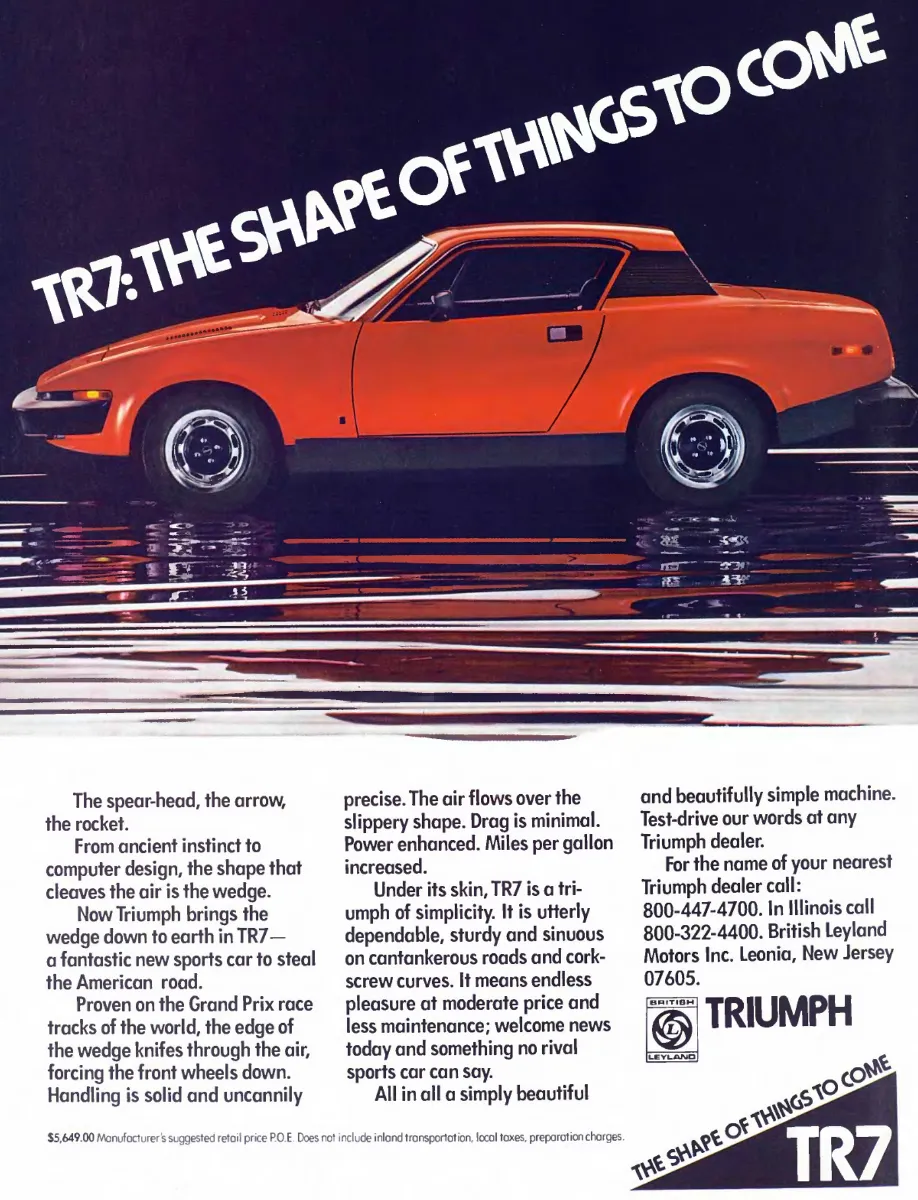
FROM THE PRINTED PAGEOriginal ad copy
OCR transcription from the archived page. Scanning and reading-order errors may remain.
TR7: THE SHAPE OF THINGS TO COME The spear-head, the arrow, the rocket. From ancient instinct to computer design, the shape that cleaves the air is the wedge. Now Triumph brings the wedge down to earth in TR7—a fantastic new sports car to steal the American road. Proven on the Grand Prix race tracks of the world, the edge of the wedge knifes through the air, forcing the front wheels down. Handling is solid and uncannily precise. The air flows over the slippery shape. Drag is minimal. Power enhanced. Miles per gallon increased. Under its skin, TR7 is a triumph of simplicity. It is utterly dependable, sturdy and sinuous on cantankerous roads and corkscrew curves. It means endless pleasure at moderate price and less maintenance; welcome news today and something no rival sports car can say. All in all a simply beautiful and beautifully simple machine. Test-drive our words at any Triumph dealer. For the name of your nearest Triumph dealer call: 800-447-4700. In Illinois call 800-322-4400. British Leyland Motors Inc., Leonia, New Jersey 07605. BRITISH LEYLAND TRIUMPH THE SHAPE OF THINGS TO COME TR7 $5,649.00 Manufacturer's suggested retail price P.O.E. Does not include inland transportation, local taxes, preparation charges.
Commentary
The orange car is almost a diagram against black. It sits in exact profile, its long bonnet and abrupt roofline easy to trace, while a glossy reflection repeats the shape below. Above it, the headline climbs at an angle: “The shape of things to come.” I follow that line, then return to the roof and nose. Triumph has made the silhouette the evidence and the prediction at once.
The copy gives the wedge a long ancestry: spear-head, arrow, rocket. That sequence makes a controversial-looking sports car feel like the latest version of an old solution to moving through air. The prose then turns to claims about front-wheel downforce, drag, handling, fuel economy, and simplicity. The scan records these assertions, but offers no figures or independent comparison to substantiate “minimal” drag or the statement that no rival can match its maintenance story. The $5,649 suggested price and a test-drive invitation keep the futuristic rhetoric attached to a dealer visit and a real buying decision.
The ad’s confident future tense is revealing now. The British Motor Museum dates the TR7’s launch to 1975, and its collection records the last TR7 in 1981. The car that was to announce what came next is now studied as a particular design decision from a particular company. That does not make the headline foolish; it shows how advertising often asks a new form to carry a larger forecast.
For a young copywriter, “shape” is the useful double word. It means the visible wedge and the future the brand wants the buyer to imagine. Short sentences—“Drag is minimal. Power enhanced. Miles per gallon increased.”—give the engineering claims a brisk rhythm after the more theatrical opening. The final “Test-drive our words” admits that the language must meet the road. When a product’s form is divisive, copy can explain the intended benefit, then invite direct experience.
Triumph sold this TR7 through British Leyland Motors in the United States. The British Motor Museum describes the model and its place in the marque’s history; Triumph-badged cars are no longer in production, though the museum preserves examples of the line.
The link between a recognizable shape and a claimed driving benefit still resonates. The specific assurances about efficiency, dependability, and unmatched low maintenance are promises of this ad, not findings established by it. Its lasting lesson is the way a single silhouette can organize both the image and the argument.