Electronics 1970
Polaroid
Money buys everything.
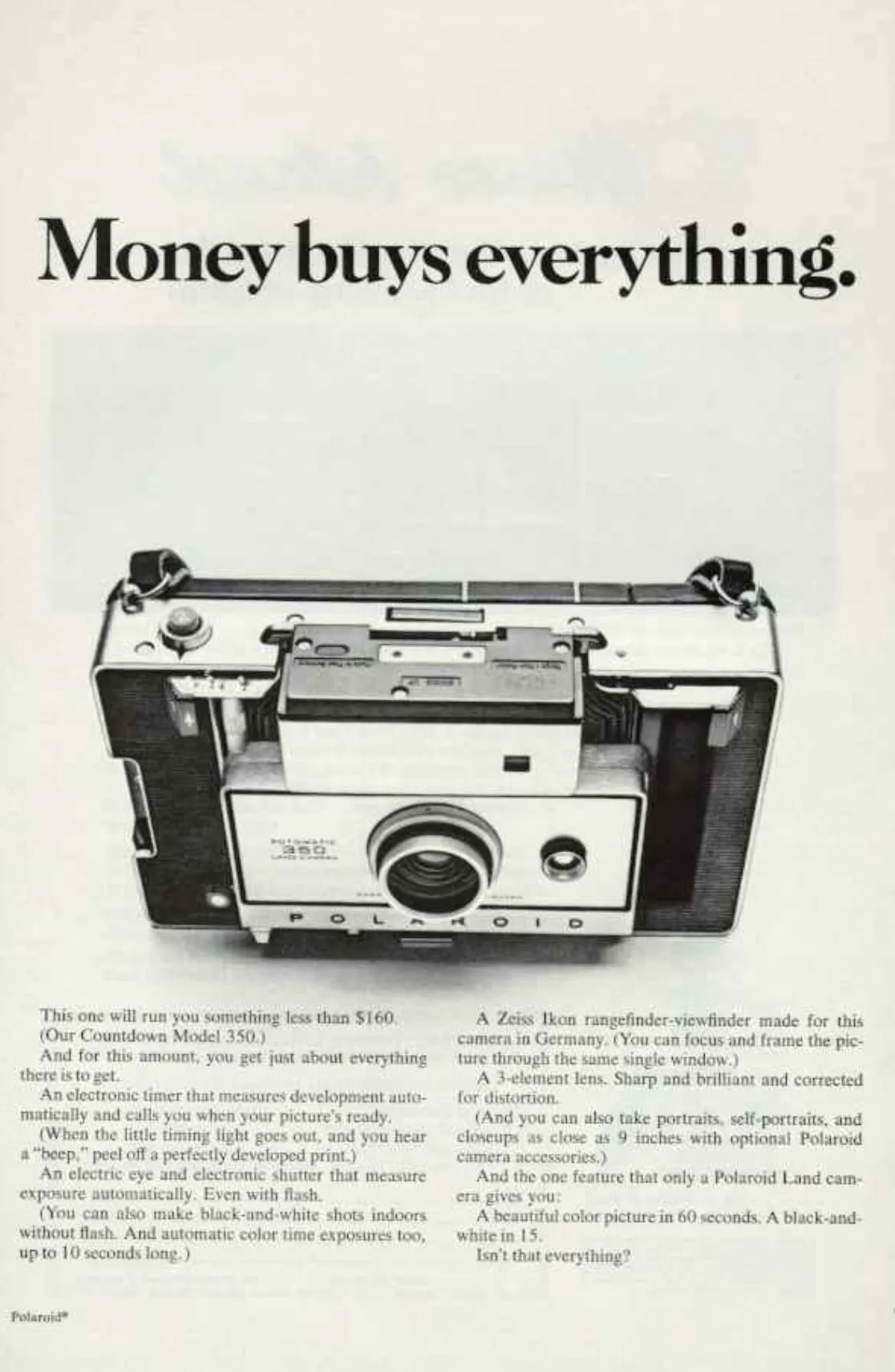
FROM THE PRINTED PAGEOriginal ad copy
OCR transcription from the archived page. Scanning and reading-order errors may remain.
Money buys everything. This one will run you something less than $160. (Our Countdown Model 350.) And for this amount, you get just about everything there is to get. An electronic timer that measures development automatically and calls you when your picture's ready. (When the little timing light goes out, and you hear a “beep,” peel off a perfectly developed print.) An electric eye and electronic shutter that measure exposure automatically. Even with flash. (You can also make black-and-white shots indoors without flash. And automatic color time exposures too, up to 10 seconds long.) A Zeiss Ikon rangefinder-viewfinder made for this camera in Germany. (You can focus and frame the picture through the same single window.) A 3-element lens. Sharp and brilliant and corrected for distortion. (And you can also take portraits, self-portraits, and closeups as close as 9 inches with optional Polaroid camera accessories.) And the one feature that only a Polaroid Land camera gives you: A beautiful color picture in 60 seconds. A black-and-white in 15. Isn't that everything? Polaroid®
Commentary
“Money buys everything” looks like a reckless general claim until the small type narrows its jurisdiction. The “everything” is what the Countdown Model 350 offers for a price under $160. The camera floats alone in a broad white field, with no photographer or finished picture in sight. That restraint keeps the buyer’s eye on the instrument while the two columns below build the case for its completeness.
The list moves from ease to control and finally to the product’s distinctive result. An electronic timer signals when development is finished; exposure is automatic, even with flash; a Zeiss Ikon rangefinder-viewfinder combines focusing and framing; the lens and optional accessories extend the range of pictures. Only after those specifications does the copy reach the dramatic payoff: a color print in 60 seconds or a black-and-white print in 15. The timing claims belong to the advertisement; the page itself cannot show the finished print.
The word “everything” also exposes a particular idea of photographic abundance. The buyer is promised a device that manages technical uncertainty and delivers a physical result almost immediately. Today a phone can display and share an image at once, but an instant print still offers something the screen does not: an object handed to someone on the spot. The ad sits at an interesting point between convenience as automation and convenience as possession.
For a new copywriter, notice how the opening overstates and then promptly defines its terms. The parenthetical explanations translate each feature into an action: hear a beep, peel a print, focus and frame through one window. The closing question, “Isn’t that everything?”, repeats the headline only after the list has done its work. A large claim becomes easier to accept when the copy makes the promised contents countable.
Polaroid dates its first Land camera to 1947 and remains an instant-photography brand. Its current camera range continues to sell the appeal of a physical picture made close to the moment of capture.
Instant gratification is still the brand’s central experience, though electronic timing and automatic exposure no longer feel like a complete account of photographic possibility. The page’s lasting lesson is the staged reveal: features matter most after the reader understands the result they serve.