Electronics 1985
Panasonic
Hear to eternity. This Panasonic with auto-reverse lets the music go on forever.
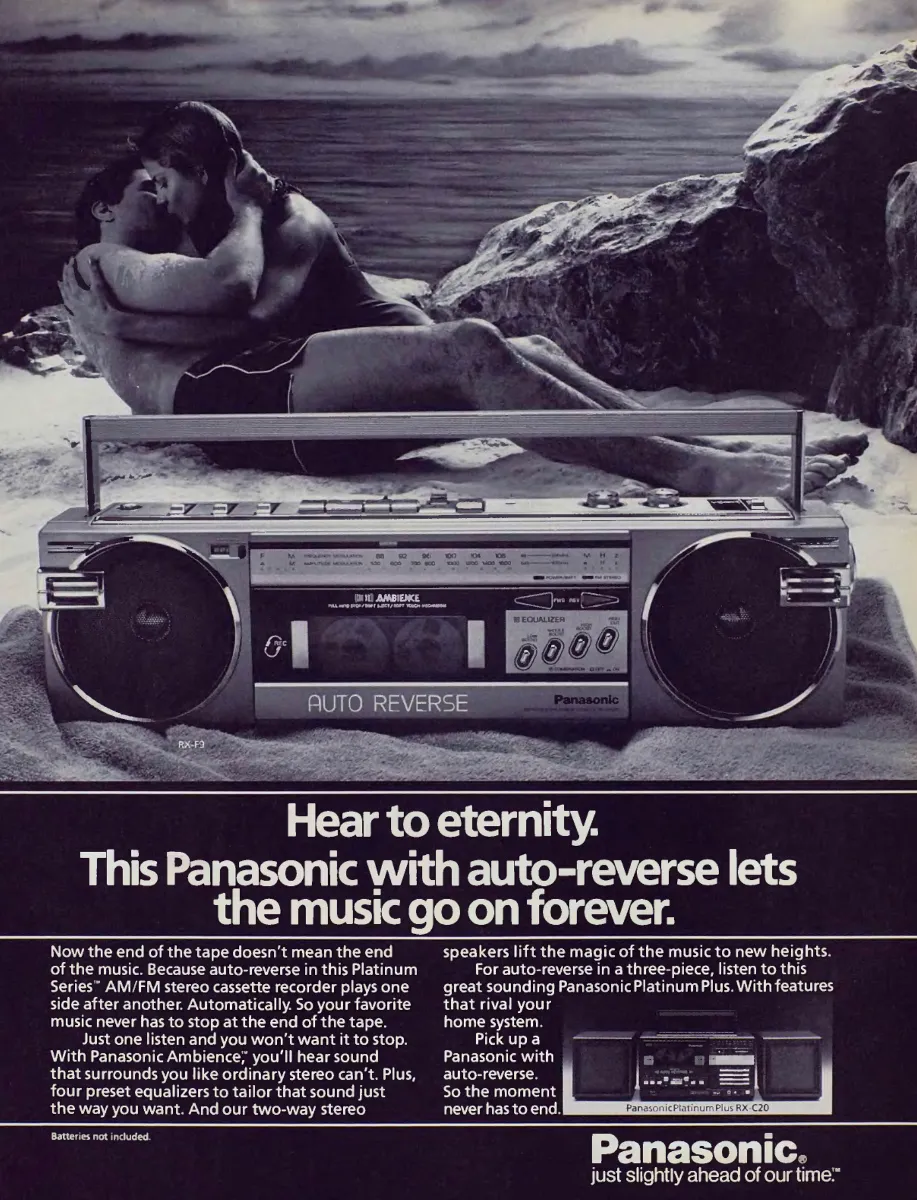
FROM THE PRINTED PAGEOriginal ad copy
OCR transcription from the archived page. Scanning and reading-order errors may remain.
RX-F9 AMBIENCE EQUALIZER AUTO REVERSE Panasonic Hear to eternity. This Panasonic with auto-reverse lets the music go on forever. Now the end of the tape doesn't mean the end of the music. Because auto-reverse in this Platinum Series™ AM/FM stereo cassette recorder plays one side after another. Automatically. So your favorite music never has to stop at the end of the tape. Just one listen and you won't want it to stop. With Panasonic Ambience,™ you'll hear sound that surrounds you like ordinary stereo can't. Plus, four preset equalizers to tailor that sound just the way you want. And our two-way stereo speakers lift the magic of the music to new heights. For auto-reverse in a three-piece, listen to this great sounding Panasonic Platinum Plus. With features that rival your home system. Pick up a Panasonic with auto-reverse. So the moment never has to end. Panasonic Platinum Plus RX-C20 Batteries not included. Panasonic® just slightly ahead of our time.™
Commentary
At first I see an embrace; then the enormous cassette recorder almost blocks my view. Its carrying handle runs across the lovers like the edge of a frame. Panasonic gives the machine an improbable share of the beach, but the disproportion has a job: this object is supposedly protecting the scene behind it from interruption.
The headline supplies the connection. “Hear to eternity” converts a romantic promise into an audio benefit, and the next line names the mechanism immediately: auto-reverse. The body explains the small inconvenience on which the whole fantasy depends. A cassette has two sides. Ordinarily, reaching the end demands attention; this machine handles the transition. The ad enlarges that rescued interval until it becomes the difference between a sustained mood and an interrupted one.
I follow the copy down to the three-piece RX-C20 inset and find a second selling task. Panasonic is not only promoting the photographed RX-F9; it is extending the auto-reverse benefit across a range. Ambience, four preset equalizers and two-way speakers provide reasons to care about the sound as well as its duration. The tiny “Batteries not included” is a useful punctuation mark beneath all this eternity. The promise concerns tape handling, not a literal exemption from physical limits.
The changed habit here is remarkably concrete. Music once required turning over a cassette, an action small enough to forget but frequent enough to organize an advertising idea around. For a listener accustomed to a digital queue, continuity is less surprising. The older page helps explain why convenience should be evaluated against the interruption a person actually experiences, rather than against the complexity of the engineering that removes it.
For a beginning copywriter, the strongest move is the immediate explanation after the pun. “Hear” earns attention, but “auto-reverse” prevents the joke from floating away from the product. “Automatically” receives its own sentence, briefly demonstrating effortless completion. The repeated “end” then links a technical boundary to an emotional fear. Wordplay is useful when the following sentence makes its relevance plain.
Panasonic’s corporate product history dates the business to Konosuke Matsushita’s 1918 electrical-products venture. Its current home-entertainment range continues to include audio equipment alongside television and home-cinema products.
The wish to preserve a listening mood remains recognizable. The cassette-specific solution belongs to its medium, while the larger design promise—making the equipment demand less attention during enjoyment—still gives audio brands something meaningful to sell.