Electronics 1981
General Electric
Choose your escape route.
FROM THE PRINTED PAGEOriginal ad copy
OCR transcription from the archived page. Scanning and reading-order errors may remain.
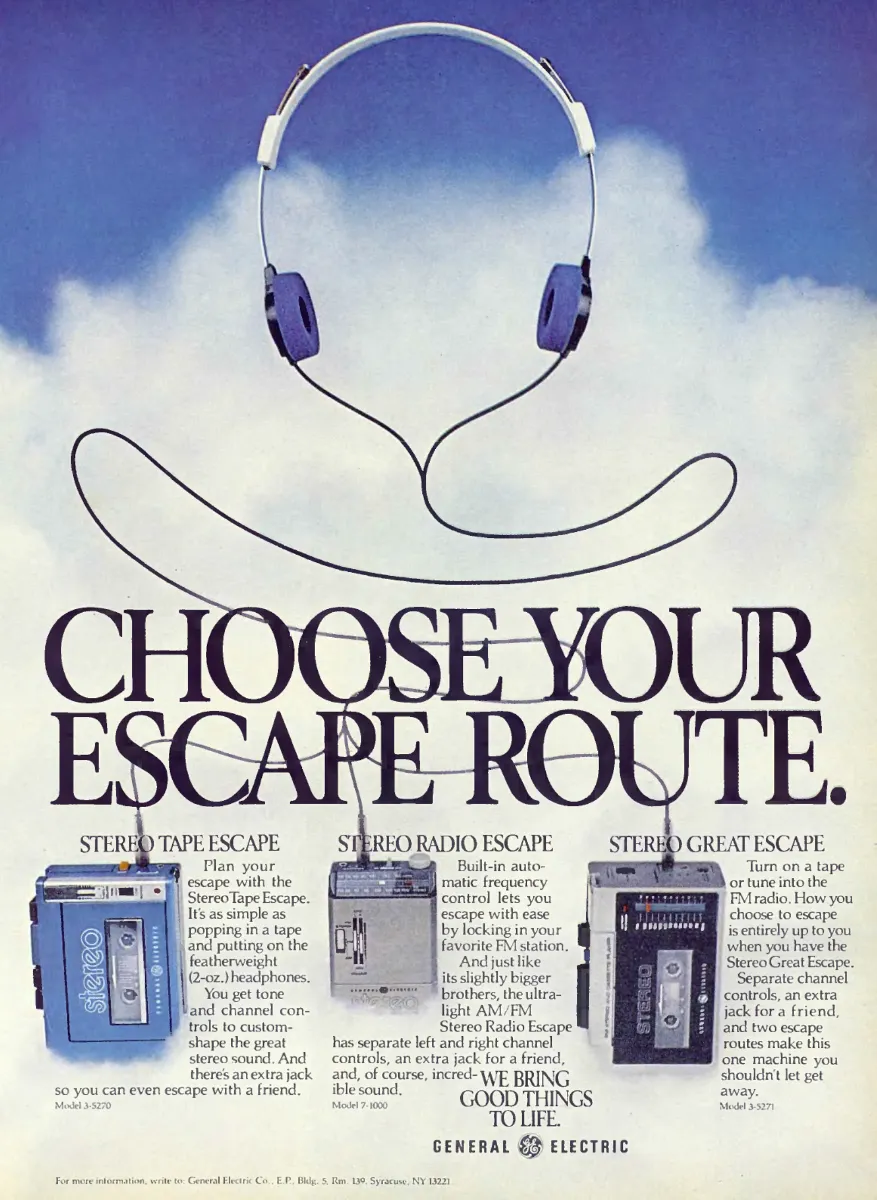
CHOOSE YOUR ESCAPE ROUTE. STEREO TAPE ESCAPE Plan your escape with the Stereo Tape Escape. It’s as simple as popping in a tape and putting on the featherweight (2-oz.) headphones. You get tone and channel controls to custom-shape the great stereo sound. And there’s an extra jack so you can even escape with a friend. Model 3-5270 STEREO RADIO ESCAPE Built-in automatic frequency control lets you escape with ease by locking in your favorite FM station. And just like its slightly bigger brothers, the ultra-light AM/FM Stereo Radio Escape has separate left and right channel controls, an extra jack for a friend, and, of course, incredible sound. Model 7-1000 STEREO GREAT ESCAPE Turn on a tape or tune into the FM radio. How you choose to escape is entirely up to you when you have the Stereo Great Escape. Separate channel controls, an extra jack for a friend, and two escape routes make this one machine you shouldn’t let get away. Model 3-5271 WE BRING GOOD THINGS TO LIFE. GENERAL ELECTRIC For more information, write to: General Electric Co., E.P. Bldg. 5, Rm. 139, Syracuse, NY 13221
Commentary
I followed the headphone cable before choosing a player. It loops across the sky, passes through the giant headline, and eventually joins the equipment below. Against clouds, an ordinary wire becomes the drawn route of an escape. General Electric gives most of the page to the feeling of release, then offers three practical ways to obtain it.
The three columns resemble a compact buying guide. Stereo Tape Escape plays cassettes; Stereo Radio Escape supplies AM/FM reception; Stereo Great Escape combines tape and FM. The naming makes the range sound like degrees of freedom, but the body preserves the actual distinctions. The radio model is described as smaller than its brothers. The tape unit’s headphones weigh two ounces. Separate channel controls and an extra jack recur across the range, making personal adjustment and shared listening part of the family resemblance.
The second jack changes the meaning of escape. This is not necessarily withdrawal from company. Each description allows another listener into the private sound space, provided the friend remains close enough to the same player. I find that small practical constraint more revealing than the clouds. The ad imagines freedom from one’s surroundings alongside the possibility of taking a companion along.
Today portable audio may arrive through a phone and wireless headphones, with the source selected on a screen. Here the customer first chooses what kind of source the hardware can accept. The comparison is useful to a marketer: the emotional benefit can remain stable while the decision that delivers it moves elsewhere. “Escape” survives changes in media more easily than the product range organized beneath it.
For a new copywriter, the repeated “Escape” does several jobs: product name, benefit, instruction, and visual theme. The final description’s “shouldn’t let get away” turns the idea back toward purchase without introducing a fresh metaphor. The parallel columns also make similar details easy to compare. The lesson is to build a vocabulary that can organize a range as well as headline it, while keeping each model’s difference legible.
General Electric’s broad industrial identity once encompassed products such as these portable stereos. Its current corporate explanation describes the separation into GE HealthCare, GE Vernova, and GE Aerospace, completed in 2024. The present aviation company should not be treated as a continuing seller of this audio range.
The continuing customer need is control over the sound accompanying everyday life. Cassettes, tiny wired headphones, and three separate hardware choices locate its delivery in 1981. The durable creative move is making a cable and a product comparison tell the same story about personal freedom.