Consumer Goods 1980
Gatorade
By the time your mouth gets thirsty, your body could be two quarts low.
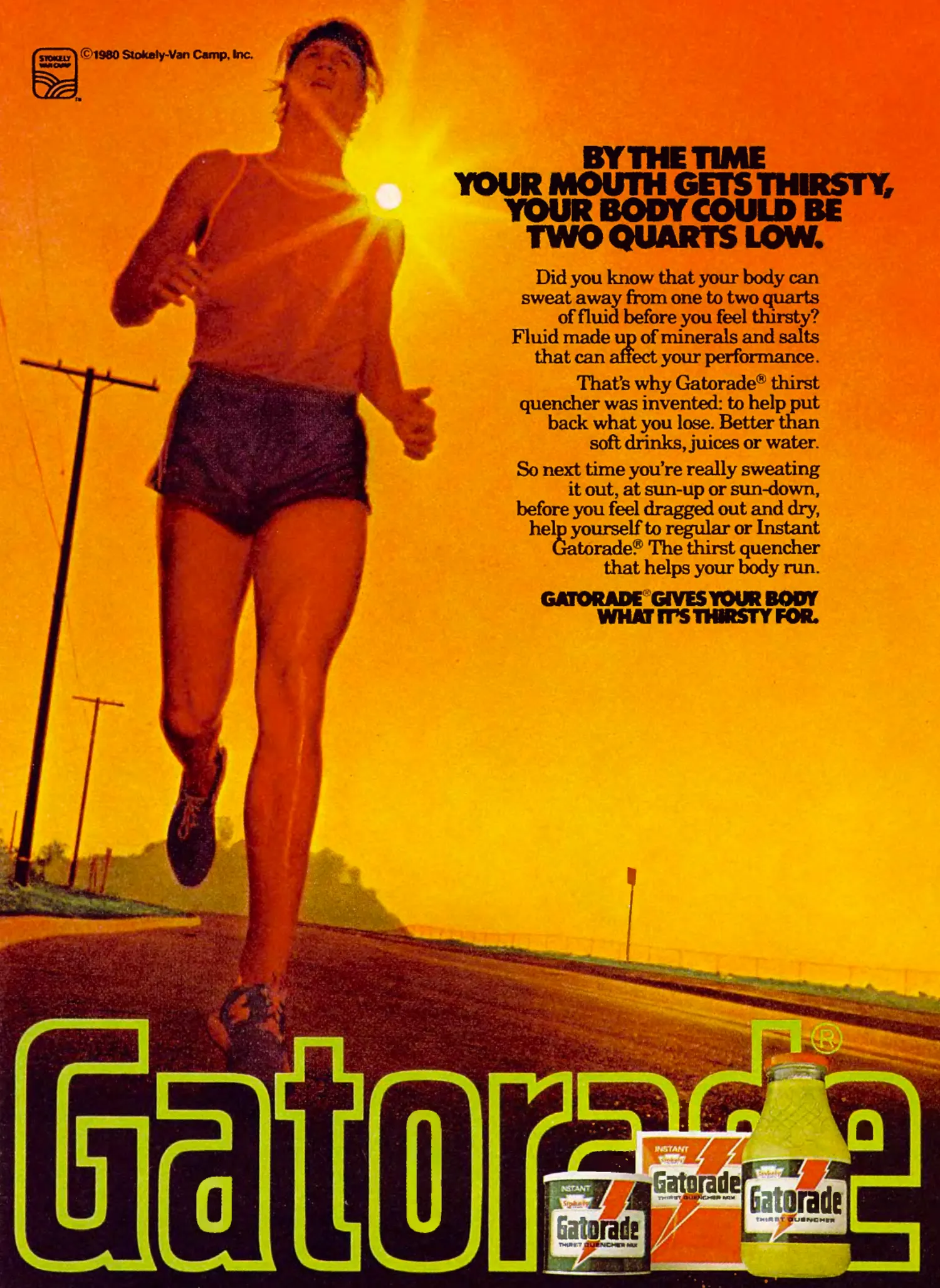
FROM THE PRINTED PAGEOriginal ad copy
OCR transcription from the archived page. Scanning and reading-order errors may remain.
© 1980 Stokely-Van Camp, Inc. BY THE TIME YOUR MOUTH GETS THIRSTY, YOUR BODY COULD BE TWO QUARTS LOW. Did you know that your body can sweat away from one to two quarts of fluid before you feel thirsty? Fluid made up of minerals and salts that can affect your performance. That's why Gatorade® thirst quencher was invented: to help put back what you lose. Better than soft drinks, juices or water. So next time you're really sweating it out, at sun-up or sun-down, before you feel dragged out and dry, help yourself to regular or Instant Gatorade.® The thirst quencher that helps your body run. GATORADE® GIVES YOUR BODY WHAT IT'S THIRSTY FOR. Gatorade® Thirst Quencher
Commentary
The ad opens with a physiological warning rather than a flavor promise. “By the time your mouth gets thirsty” turns an ordinary sensation into a delayed signal, while “two quarts low” gives the warning a memorable quantity. The copy then explains sweat, minerals, and salts before presenting Gatorade as the answer. It teaches the reader why the product exists, then uses that explanation to make the purchase feel practical.
The runner is photographed in a hot, almost monochrome orange landscape. That heat makes the headline’s thirst scenario visible, and the runner’s forward motion gives “helps your body run” a literal image. The huge green Gatorade wordmark and the small group of regular and Instant packages anchor the scientific-sounding argument in a recognizable product choice. The comparison with soft drinks, juices, or water is direct and easy to remember.
The audience is broader than elite competition: anyone exercising outdoors, at “sun-up or sun-down,” is invited to notice sweat before feeling “dragged out and dry.” The ad’s strongest technique is timing. It asks the reader to act before thirst, shifting Gatorade from a refreshment bought after exertion to preparation for exertion.
Gatorade began in 1965 when University of Florida researchers developed a drink to replace fluids and electrolytes lost by athletes; PepsiCo now presents it as a global performance and wellness portfolio with hydration, protein, energy, and nutrition products. PepsiCo’s brand overview and Gatorade’s current FAQ describe that science-based foundation and today’s broader product range.
The old ad still resonates in its effort to make an invisible body process understandable and actionable. Its education-first structure survives in today’s electrolyte and hydration messaging, but the single thirst-quencher solution feels narrower now: current products address lower sugar, specialized electrolytes, powders, and everyday wellness occasions. The visual athlete remains familiar, while modern audiences also expect clearer nutrition context and more individualized choices.